EcoLogic Monthly #77
April 2026
Welcome to the 77th EcoLogic staff newsletter! All archived newsletters can be accessed here!
After years of intrepid journalism, Alice is stepping down from newsletter duty. Lauren will now be compiling and distributing the monthly EcoLogic news. Thank you Alice for all of your hard work creating such detailed and entertaining updates!
Health & Safety
Update from Safety Officer Wade:
Hello and Welcome to April.
Our Joint Occupation Health and Safety (JOHS) Committee’s Co-Chair’s two year term has come to an end. Thank you Kyla W and Martin R for being leaders of the committee. Your insight, experience, and efforts have contributed greatly to the committee and to keeping our EcoLogic team aware and therefore safer in the many workplace environments.
It is with great pleasure to announce our newest members to the JOHS. Please welcome, Michelle Van Wyck and Lauren Elviss for a two year term starting April. Congratulations. There were two vacancies and two formal expressions of interest so a vote will not be required. To assist the committee while our two new members get more familiar, Katherine Garrah has agreed to be a guest contributor for the next couple of months. Thank you Katherine.

April Safety Drill
The April Safety Drill is on Violence in the Workplace. You can access the drill in the link below. Please complete by April 30th!
April Safety & Security Drill - Violence in the Workplace
As part of the drill, please review the following documents and video:
If you missed completing previous drills, please click the link here to access them!

EcoLogic’s Safety Goals 2026 have been updated and are viewable here.
Allergy Awareness
A reminder to be allergy aware as the field season begins. Avoid bringing common allergens into the Prince George, Lillooet and North Vancouver offices and work vehicles. Examples of common allergens include nuts, fragrances, pet dander, pollen, mold and many others.

Ticks
Ticks are most active in spring and early summer, from March to June, but can be found year-round on Vancouver Island, on the Gulf Islands and in the Lower Mainland. As climate change continues to affect the environment, ticks are spreading further across B.C. and have been found later in the year in more areas.
For more information, check out these links
33.0 Wildlife Safety Precautions.pdf
From the grassy ground to the lab: What the BCCDC tick team wants you to know
Ticks in British Columbia - Province of British Columbia
Incident Report Updates
There were no incidents reported for March.
Enjoy the breakup of winter, longer days and colours of Spring.
-Wade
Celebrations!
Happy Birthday to…
Bruna Banhos- April 4
Danielle Mai - April 14
Sara Sparks - April 26
Wade Bush - April 28
Happy Company Anniversary to…
Michelle Van Wyck - 8 year (April 9)
Sara Sparks- 2 year (April 15)
Baby Bush Announcement!
Congratulations to Wade and his family on the arrival of new baby Wylde Bush!

Bulletin Board
Introducing: The Teams COE Channel
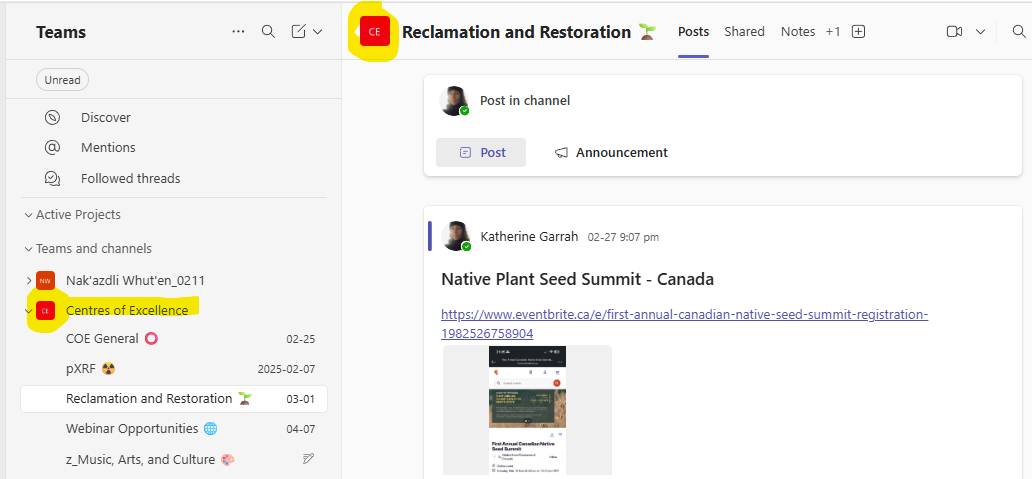
Katherine has been working on improving the Centres of Excellence channel on Teams! Below are the steps to update your views and notifications so you only see what you want to see, and don’t miss cool stuff.
See the Team
Go to your Teams icon 👥 and look for “show all teams” at the bottom of your list of Teams
On the right, click the Team you’re interested in (COE)
A list of the channels in that team will appear – click show/hide to add them to your view
Get Notified
After the Team / Channels have been added, click the three dots settings menu ( … ) beside the Channel name
Scroll down to ‘notifications’ and adjust as needed :)
We’re really looking forward to seeing everyone here, creating something with a bit of an in-person community vibe that adds personal and professional value in the Teams space, and learning about all the cool stuff that everyone comes across that you know they’d tell you about if you were sharing an office 😏🍵
Be the first to know about cool stuff!
Learn more about your colleagues interesting interests!
Learn more in general!
Have / help create a repository of subject-specific personal and professional skills / knowledge / development opportunities
If you’re not seeing your particular interest, add a new Channel that reflects the Topic you’re interested in!
Professional Development Request Form – Location and Use
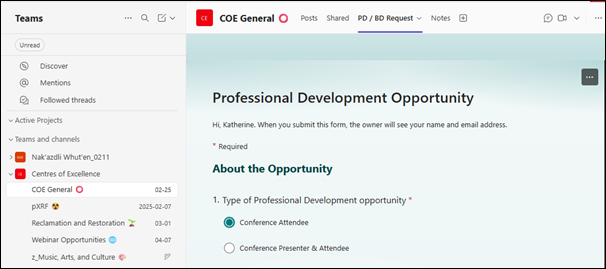
The PD request form is ready to roll! For any PD request (training, conference, course etc.) please fill out the form and then contact your manager to let them know you’ve submitted a request
The form does several things:
it creates an archive of opportunities that occur annually / regularly, so we call all stay on top of what might be available in the future (or jump on board with something happening)
it assists with aligning opportunities to professional development goals and maintaining the recording
The PD request form is accessible in several locations:
On the Centres of Excellence Team, in the “General” channel at the tab along the top.
On EcoLogic’s SharePoint - It’s Front-Page News :)

EcoLogic “sew-cial”!
Zoe has started up a lunch “sew-cial” to share creative pursuits, ideas, inspiration, motivation, and support. This group is open to anyone at EcoLogic and includes all creative endeavours, not just crafting!
The first meeting was held on March 26, and the current plan is to meet the last Thursday of the month.
If you are interested in attending please reach out to Zoe!
Celebrating Spring!
Alice’s Mystery Seeds Update
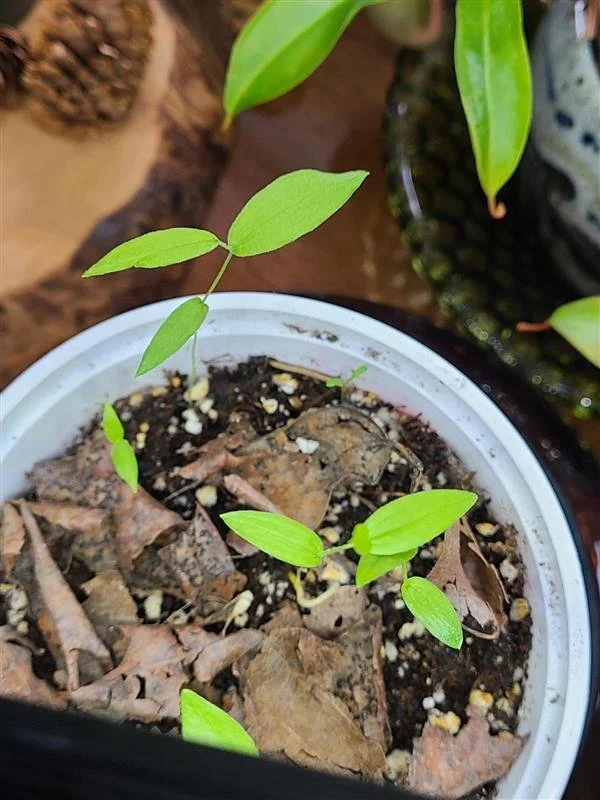
Last month Alice found some germinating seeds in an old pile of bear scat. Now that they’ve sprouted, it looks like they might be clasping twistedstalk (Streptopus amplexifolius)!
News in Ecology
Publication alert!
Mark and Jason are co-authors on a new paper published in Conservation Science and Practice examining the effects of open pit coal mining on caribou in the Quintette herd. You can read their paper here!
Abstract
Although population management measures have been used to avoid continued extirpation of caribou (Rangifer tarandus caribou) in some areas of British Columbia (BC), protection and restoration of their range remain challenging. Effectiveness of mitigations associated with continued loss of habitat through industrial resource extraction is unproven, making assessment and regulation of applications for large industrial projects unreliable. Using a longitudinal data sample and a spatial control, we quantified the potential effects of open-pit coal mining by comparing the behavior and demographics of caribou groups in areas with and without mining within the Quintette herd of the Central Group of Southern Mountain Caribou in BC. The Treatment (with mining) and Control (no mining) areas are in separate units of High Elevation Winter Range (HEWR), a habitat critical for sustaining these caribou. The Treatment and Control areas were sufficiently separated that groups of caribou used the areas discretely. We characterized a cascade of ecological events for Treatment caribou beginning with maladaptive behavior responses leading to negative demographic outcomes that were not observed for Control caribou. After the start of mining, Treatment caribou spent proportionately more time at low elevations away from HEWR, resulting in larger areas of use during winter in habitat with greater levels of anthropogenic disturbance. Greater risk of predation was assumed to occur from the disturbance-mediated apparent competition operating within the more general herd area and, consistent with that assumption, Treatment caribou had lower vital rates (adult survival and juvenile recruitment) compared to Control caribou. This outcome indirectly exacerbated the decline in number of caribou using the Treatment area, and that group declined to zero by the end of the study. The multiple lines of evidence from behavioral responses to demographic effects suggest that critical habitat for these caribou becomes either compromised or irreparably harmed by mining disturbance.
Funding Opportunities
Polar Knowledge Canada (POLAR) is accepting applications for the POLAR Country Foods and Food Security Call for Proposals. A maximum of $100,000 per year, to a total project maximum of $300,000 over three years will be provided for projects that increase knowledge regarding the health, availability, and sustainability of country foods. You can learn more about the program and funding application here.
International Bat Appreciation Day
April 17th was International Bat Appreciation Day! As the weather begins to warm, bats are appearing in the evenings as they emerge from hibernation or migrate back to BC for the summer. The BC Bat Action Team has provided some resources to help support bats in your area!
Learn about bats at www.bcbats.caor contact info@bcbats.ca
Enquire if your library has a BatPack for loan (eg. Fraser Valley, Thompson-Nicola , Squamish , Penticton, Kootenays)
Make your yard or property bat-friendly – see ideas in the Bat-friendly Communities Guide
Participate in the BC Annual Bat Count
Report dead or sick batsfor White Nose Syndrome surveillance from Nov 1 – May 31
Install, register and monitor a bat box
Become a Bat Ambassador for your community
Report bats using bridges and colonies in natural or anthropogenic structures to Mandy.Kellner@gov.bc.ca
Weird and Wonderful iNaturalist Observation of the Month
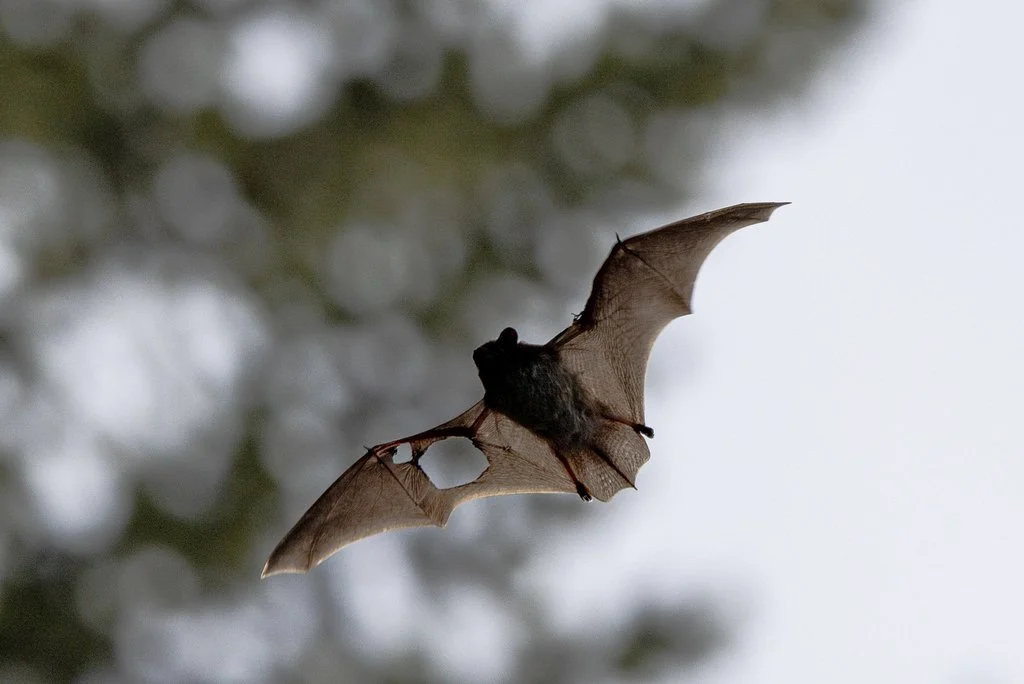
In honour of Bat Appreciation Day, here’s a Silver-haired Bat seen by kalvinchan in the Okanagan flying about despite a damaged wing!